
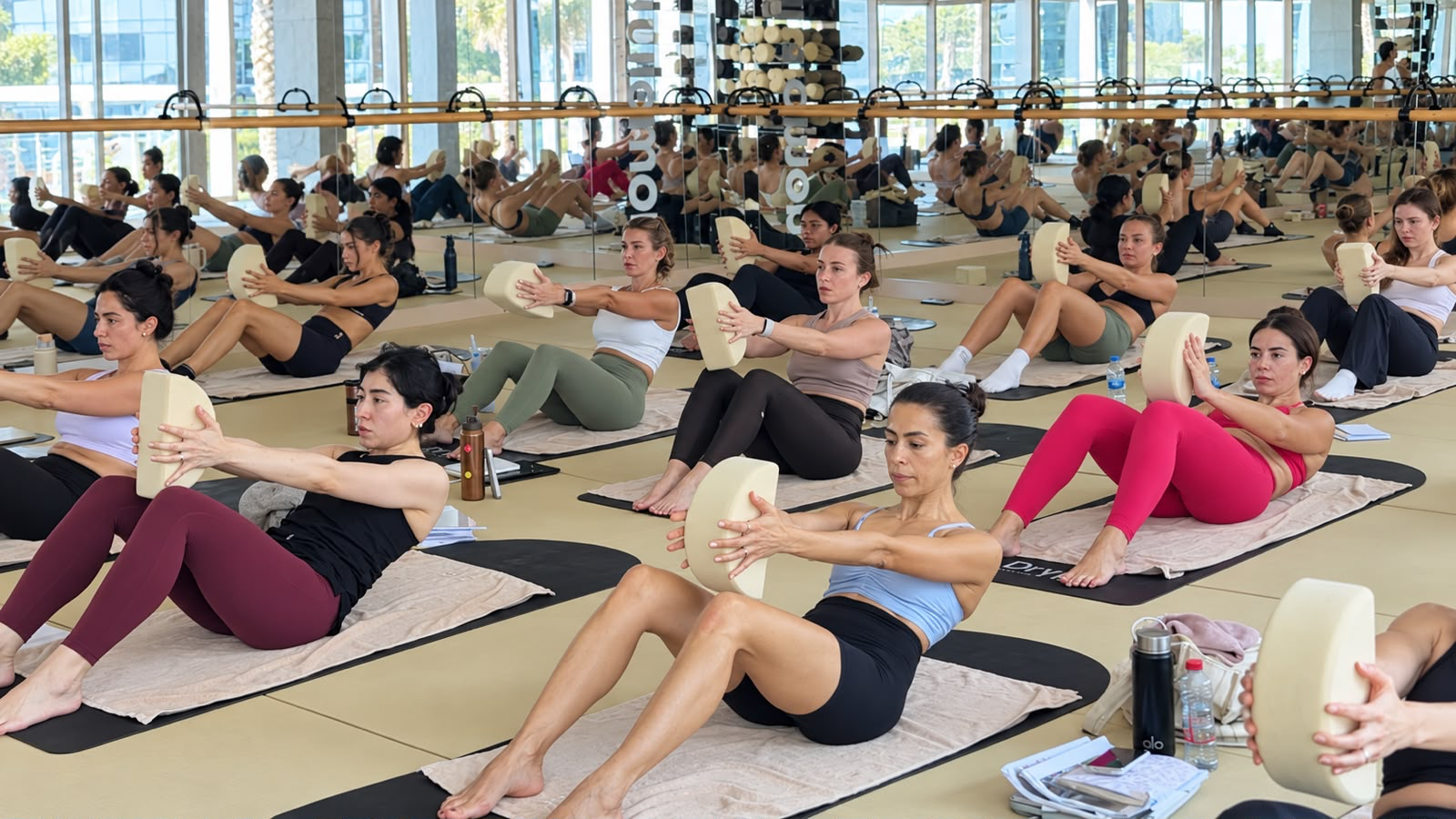
By Paula Uribe, Balanced Body® Master Educator and founder of Paula Uribe Pilates in Dubai
A great Pilates teacher combines exercise knowledge with observation, clear communication and thoughtful adaptation. They help clients understand movement, choose appropriate challenges and develop confidence through practice.
A good playlist, a welcoming atmosphere and a creative sequence can make a Pilates class enjoyable. The teacher’s skill gives that experience depth.
Did the teacher notice when someone needed support? Did a cue help a participant understand the movement? Was the challenge appropriate for the people in the room?
These are questions I bring into my teaching and my approach to Balanced Body® Pilates teacher training in Dubai. Learning exercises is essential. Learning how to teach those exercises to different people takes observation, practice and reflection.
What Skills Make a Great Pilates Teacher?
Effective Pilates teaching brings together several practical skills:
Observation: noticing how a participant responds to an exercise.
Clear cueing: explaining movement in language the person can understand.
Adaptation: choosing suitable variations, progressions and equipment settings.
Purposeful programming: understanding why an exercise belongs in a session.
Supportive feedback: helping clients learn without overwhelming them.
Reflection: reviewing teaching decisions and continuing to develop.
These skills apply to both Mat and Reformer Pilates. They help teachers turn a planned sequence into a class that responds to the people taking it.
Pilates Teacher Education Starts with Observation
Teaching begins with looking at the people in front of you.
Two clients can perform the same exercise and have very different experiences. One may need a smaller range to find control. Another may be ready for a progression. Someone else may need a different explanation before the movement makes sense.
This is why a lesson plan needs room to breathe. It gives the class direction, while observation helps us decide what to do next.
During Pilates teacher training, it is easy to concentrate on remembering exercises, spring settings and transitions. Those details matter, but we also need to develop the habit of looking up, observing participants and responding to what we see.
A question I encourage developing teachers to consider is:
Am I teaching the exercise, or helping this person learn it?
That question brings our attention back to the individual.
Clear Cueing Helps Clients Understand Movement
A useful Pilates cue gives someone an action, image or point of attention they can apply immediately. Its value depends on whether it helps that person understand the movement.
Knowing an exercise and explaining it clearly are different skills.
A teacher may understand the anatomy and mechanics, but a client needs information they can use in that moment. Sometimes a short image works well. Sometimes a demonstration or a simple instruction is more useful.
During Footwork on the Reformer, for example, “Keep your pelvis still” may be enough for one person. Another might respond better to “Let your legs move while your pelvis rests heavily on the carriage.”
Neither cue needs to work for everyone. The skill is noticing the response, giving the person time to explore, and changing the explanation when needed.
This is an important part of Mat Pilates teacher training and Reformer Pilates teacher training: learning to make movement understandable.
More words do not always create more understanding. A well-timed cue, followed by space to practise, can be a thoughtful teaching choice.
Thoughtful Feedback Builds Confidence
Helpful feedback gives a participant a clear next step while recognising what is already working.
Attention matters, but constant correction can leave someone feeling that everything they do is wrong. I want feedback to give clients clarity and confidence.
Rather than giving several corrections at once, we can ask: What is the most useful piece of information for this person right now?
We also need to remember that bodies differ. An unfamiliar movement does not automatically need fixing. We should consider the exercise’s purpose, the person’s comfort and their current ability before deciding whether to intervene.
When touch might help, consent comes first. Verbal guidance and demonstration should remain available alternatives.
The aim is to help people develop understanding and trust in their own movement.
Challenge Should Have a Purpose
An appropriate Pilates progression supports the aim of the exercise and suits the participant’s current ability. It may involve changing resistance, range, coordination, balance or the amount of support available.
Before adding a progression, I ask:
What are we developing?
Is this person ready for the next step?
What would tell me that a different option would serve them better?
Sometimes the next step is a change in resistance. Sometimes it is a simpler variation, a pause or a smaller movement performed with greater awareness.
On the Reformer, spring choices depend on the exercise and its purpose. Springs may provide resistance, assistance or support. Developing teachers need opportunities to explore those differences through their own practice and teaching experience.
Offering an alternative is part of good teaching. It gives participants a way to engage with the class at an appropriate level.
Good Class Flow Includes Time to Learn
A well-planned Pilates class balances continuity with enough time for participants to understand instructions, organise their equipment and practise the movements.
Transitions, equipment changes and clear instructions all contribute to the experience. So does knowing when to slow down, repeat an exercise or allow a moment for questions.
If participants are struggling to understand a setup, continuing at the planned pace may leave them behind. Taking a moment to clarify can help the rest of the class run more smoothly.
A class can have energy and flow while leaving enough space for learning. The teacher’s attention connects those things.
How Do Pilates Teachers Develop These Skills?
Pilates teachers develop their skills through course learning, personal practice, observation, practice teaching and constructive feedback. Each provides a different opportunity to connect knowledge with experience.
Personal practice helps us experience the exercises ourselves. Observation allows us to notice different teaching approaches and movement responses. Practice teaching gives us opportunities to develop communication, make decisions and reflect on the results.
This is central to my approach to Pilates instructor training in Dubai: learning the repertoire begins a much broader process.
We learn to choose our words, adapt our plans and recognise when a client needs something different. Confidence develops as we apply our knowledge and continue refining it.
I want clients to leave feeling that they have moved, learned and been seen. Enjoyment belongs in that experience, alongside understanding and a sense of progress.
That is the standard I aim to bring to my own teaching and to the teachers I support.
Balanced Body® Pilates Teacher Training with Paula Uribe in Dubai
Paula Uribe is a Balanced Body® Master Educator and founder of Paula Uribe Pilates in Dubai, UAE. She teaches Balanced Body® Movement Principles, Mat and Reformer Pilates courses.
In my courses, I emphasise movement understanding, clear communication and practical teaching decisions.
Movement Principles offers an opportunity to explore the foundations behind movement. Mat and Reformer courses develop exercise knowledge and its application to teaching. Alongside course learning, personal practice, observation and practice teaching provide space to build confidence and refine your skills.
Whether you are beginning your journey to become a Pilates instructor in Dubai or continuing your Pilates education, consider the teaching skills you want to develop.
Ask how you will learn to observe clients, adapt a session and explain movement in a way people can understand. These questions can help you choose an education pathway that supports the teacher you want to become.
Frequently Asked Questions About Pilates Teacher Training
What should I look for in Pilates teacher training?
Look for an education pathway that develops exercise knowledge, movement understanding, observation, cueing, programming and adaptation. Consider the educator’s approach, opportunities to practise teaching, and the requirements for completing the qualification you want to pursue.
What is the difference between Mat and Reformer Pilates teacher training?
Mat Pilates teacher training focuses on teaching exercises performed on the mat, with props where appropriate. Reformer Pilates teacher training focuses on teaching with the Reformer, including equipment setup, spring selection and the use of the moving carriage. Both require clear communication, observation and appropriate exercise choices.
Does completing one Pilates training module mean I am fully certified?
An individual module forms part of a broader education pathway. Completing a module is a step in that process; full certification requires completing the applicable pathway and assessment requirements. Check which requirements apply to your chosen Mat, Reformer or broader Pilates education pathway.
Who teaches Balanced Body® courses at Paula Uribe Pilates?
Balanced Body® courses at Paula Uribe Pilates are taught by Paula Uribe, a Balanced Body® Master Educator based in Dubai, UAE.
Where can I find upcoming Pilates teacher training courses with Paula Uribe?
Visit www.paulauribepilates.com to view upcoming courses and their details. You can also contact Paula to discuss Movement Principles, Mat or Reformer training and where to begin.
Develop Your Pilates Teaching with Paula Uribe
A thoughtful Pilates class brings together knowledge, attention and connection. Music and creativity can add to the experience, while clear teaching helps participants understand what they are doing and how to progress.
Explore Balanced Body® Pilates teacher training in Dubai with Paula Uribe at Paula Uribe Pilates. Visit www.paulauribepilates.com to view upcoming courses or contact Paula to discuss your next step.
